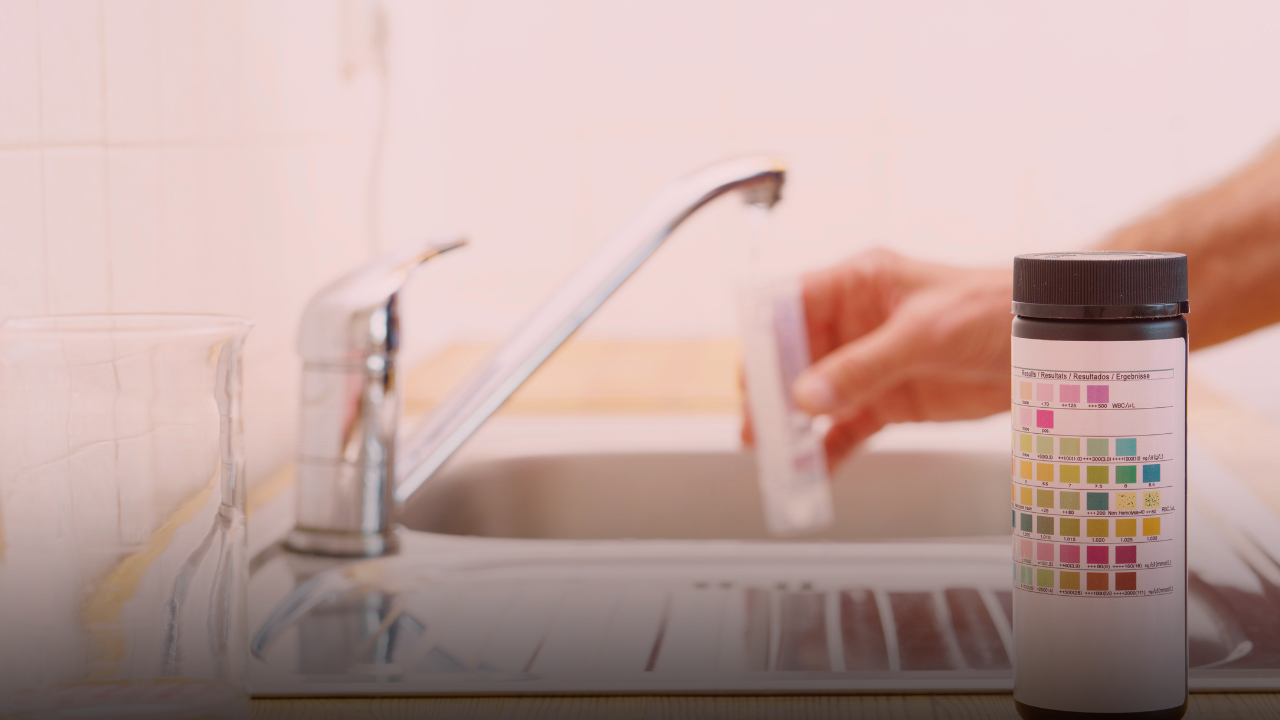
The water tastes fine. You drink it every day. But the showerhead is crusted white, the dishes never quite sparkle, and the bathroom sink wears a permanent ring of mineral residue. Hard water is the quiet houseguest that leaves a trail across every fixture and never offers to clean up.
According to
Fairfax Water, the public water supply across most of Fairfax County falls within the moderately hard range, meaning homes throughout Northern Virginia deal with hard water every day.
Here’s what you’ll learn:
- The signs of hard water you’ll see in every room of the house
- How hard water damages pipes, fixtures, and appliances
- The most effective solutions for hard water in Northern Virginia
- When to call a pro for water softener installation and water treatment
A. What Hard Water Actually Is
Hard water is water that’s high in dissolved minerals, primarily calcium and magnesium, picked up as the water moves through soil and rock. The higher the mineral content, the harder the water, and the more visible the effects show up around the house.
1. Calcium and Magnesium
Calcium and magnesium are the two main hardness minerals that define water hardness. They dissolve into groundwater and municipal supplies long before water reaches the tap, and they’re the reason hard water leaves white scale on every surface it touches.
2. How Hardness Levels Are Measured
Water hardness is measured in grains per gallon (GPG) or parts per million (PPM). Soft water falls below 3.5 GPG. Moderately hard water runs from 3.5 to 7 GPG. Very hard water tops 10.5 GPG.
Fairfax Water reports that much of Northern Virginia falls within the moderately hard water range, which is why mineral buildup is so common in local homes.
Most of Northern Virginia falls in the moderately hard range based on Fairfax Water’s published hardness levels.
3. Where the Minerals Come From
The dissolved minerals in hard water come from the bedrock and soil through which the water passes. Limestone, chalk, and dolomite are common culprits.
The mineral content of the local supply explains why some neighborhoods experience worse hard-water problems than others nearby.
B. Signs of Hard Water You’ll See Everywhere
Hard water rarely announces itself. The signs creep in slowly across every room of the house. And many homeowners chalk them up to old pipes, bad soap, or aging fixtures long before they recognize the real culprit.
Once you know what to look for, the common signs of hard water show up almost everywhere.
1. On Fixtures, Faucets, and Shower Doors
White, chalky scale buildup on faucets, showerheads, and shower doors is the most visible sign. Soap scum buildup forms on tile, glass, and fixtures, and mineral deposits leave hard water stains that resist regular cleaning, no matter how much elbow grease goes into the job.
2. On Skin and Hair
Hard water reacts with soap, stripping natural oils from the skin and hair. The result shows up as dry skin, itchy skin, dull hair, and sometimes brittle hair after even a quick shower. Even your hair feels different after washing with hard water compared to soft water.
3. On Dishes, Glassware, and Laundry
Dishes and glassware come out of the dishwasher with cloudy spots and mineral residue, even with rinse aid. Laundry feels stiff, colors fade faster, and washing machines work harder to get clothes clean. Household items take a steady beating from untreated hard water over the years.
4. On Appliances That Use Water
Coffee makers, dishwashers, washing machines, and other water-using appliances accumulate mineral buildup that affects performance. Heating elements develop scale, water heaters run less efficiently, and the appliance’s lifespan shortens because the minerals never stop building.
C. The Hidden Damage Hard Water Does to Your Plumbing
The visible signs of hard water are the easy part. The real damage happens out of sight, where mineral buildup narrows pipes, scale shortens the life of water heaters, and small problems turn into frequent repairs over the years.
1. Pipes and Plumbing System
Mineral buildup narrows pipes from the inside out, restricting water flow and forcing every fixture in the house to work harder. Most homeowners decide that their water is indeed hard once they look at what’s quietly happening inside their plumbing system.
2. Water Heater Damage
Calcium deposits and scale buildup settle at the bottom of every water heater, insulating the heating elements from the water they’re trying to heat. The result is higher energy bills, more energy used to deliver the same hot water, and a water heater that fails years before its time.
3. Costly Fixture and Appliance Failures
Hard water shortens the lifespan of every appliance it touches. Dishwashers, washing machines, ice makers, and coffee makers all develop scale buildup. This leads to costly repairs and premature replacement.
Many homeowners discover too late that what looked like normal wear was actually hard water doing slow, steady damage.
D. What Actually Fixes Hard Water
Vinegar rinses, lemon scrubs, and limescale sprays handle the surface symptoms but never fix the underlying problem. Real solutions treat the water itself before it reaches the tap.
The right water treatment system depends on the home’s hardness level, household size, and budget.
1. Comparison of Household Water Treatment Solutions
| Solution |
How It Works |
Best For |
What It Costs Generally |
| Salt-based water softener |
Ion exchange swaps calcium and magnesium for sodium |
Whole-home, very hard water |
$1,200 – $3,800 |
| Salt-free water conditioner |
Crystallizes minerals so they don’t stick to surfaces |
Moderate hardness, salt-restricted homes |
$1,500 – $4,500 |
| Whole-home filtration system |
Filters minerals plus other contaminants |
Mixed water quality concerns |
$1,200 – $5,800 |
| Reverse osmosis (point-of-use) |
Removes minerals at one tap |
Drinking and cooking water |
$150 – $1,300 |
2. Salt-Based Water Softeners
A traditional salt-based water softener uses ion exchange to swap hardness minerals for sodium ions. It’s the most effective solution for very hard water and the most common water treatment solution across the country. It delivers softer skin, brighter laundry, and longer appliance lifespans.
3. Salt-Free Conditioners
Salt-free conditioners use a different approach, crystallizing the minerals so they pass through the plumbing without sticking to pipes or fixtures. The result is reduced scale buildup without sodium, making them an effective solution for homeowners on low-sodium diets.
These conditioners are also good for septic systems sensitive to brine discharge.
4. Whole-Home Filtration
A whole-home filtration system tackles hard water alongside other contaminants, delivering cleaner water at every tap. These systems serve as a long-term solution for homes with mixed water-quality issues.
They also prevent buildup throughout the entire plumbing system rather than treating one fixture at a time.
E. Choosing the Right Water Softener for Northern Virginia
Northern Virginia’s moderately hard water means most homes benefit from a water softener, but not every home needs the same type. The right choice depends on water hardness, household size, and how the family wants to balance cost against long-term performance.
1. Salt-Based vs. Salt-Free
A salt-based softener delivers the most effective solution for very hard water and homes with multiple bathrooms. Salt-free conditioners work well for moderately hard water, like most of Fairfax County, especially for homeowners who want to avoid adding sodium to their water.
2. Sizing and Installation
A water softener has to be sized for the household. A system too small for the home runs constantly and wears out fast, while an oversized system wastes salt and money. Professional installation matters, since softeners tie into the main water line, and a single mistake could flood the basement.
F. Signs Your Hard Water Problem Is Bigger Than You Think
Most homeowners notice one or two signs of hard water and live with them for years. The problem grows quietly throughout the rest of the house, and a few telltale signs point to hard-water issues that have already moved beyond cosmetic.
Watch for these signs that the hard water problem is bigger than it looks:
- Reduced water flow at multiple fixtures due to mineral buildup inside the pipes
- A water heater that runs longer to deliver less hot water than it used to
- Multiple appliances failing earlier than their expected lifespan
- Visible scale on every shower door, faucet, and shower head in the house
- Soap and detergent costs climbing because nothing lathers in hard water
A single sign warrants a hardness test from a free water test or a basic home test kit. Two or more at once means the home is paying the price of untreated hard water every month. The longer it goes untreated, the higher that price climbs.
G. When to Call a Pro for Hard Water Solutions
A home test kit confirms the problem. But the actual fix takes a licensed plumber who knows the local water supply, the right system for the home, and how to install it correctly the first time. The wrong system or a botched installation costs more in the long run than waiting and doing it right.
When evaluating a plumbing professional for hard water solutions and water softener installation in Northern Virginia, focus on these qualifications:
- Local water knowledge, so the system matches the actual hardness levels in the area
- Experience with multiple system types, including salt-based, salt-free, and whole-home filtration
- Proper sizing and installation to match the household’s daily water usage
- Ongoing service and maintenance so the system delivers cleaner water for years
A
professional plumbing service handles testing, system selection, installation, and the dozen smaller plumbing improvements that come up during the work. Cutting corners on any step usually means a system that underperforms, and the same hard water problems return within a year or two.
H. Stop Letting Hard Water Quietly Cost You Money
Hard water rarely feels urgent until the water heater fails, the dishwasher dies young, or the shower fixtures crust over for the third time. The quiet damage adds up across every fixture and appliance in the house, and the longer it goes untreated, the more expensive it gets to fix.
At Patriot Plumbing Services,
our professionals install water softeners, salt-free conditioners, and whole-home filtration systems across Northern Virginia. We test the water, recommend the right system for the home’s hardness levels, and handle the installation.
Contact Patriot Plumbing Services today for professional water softener installation and hard water treatment service. We’ll diagnose the hard water problem, recommend the right solution, and protect every fixture in the house from the slow, steady damage that hard water leaves behind.